7 Space-Saving Kitchen Cabinet Organizers for Small Kitchens
Small cabinets can work harder without a full remodel. These seven storage ideas help you use vertical space, reach the back of deep shelves and keep everyday essentials easy to find.
How this guide was prepared: We compare common organizer types and practical fit considerations. We have not purchased or hands-on tested specific products. No paid rankings or affiliate product links appear in this article.
Quick comparison: which organizer solves your problem?
| Organizer | Works best for | Key thing to measure |
|---|---|---|
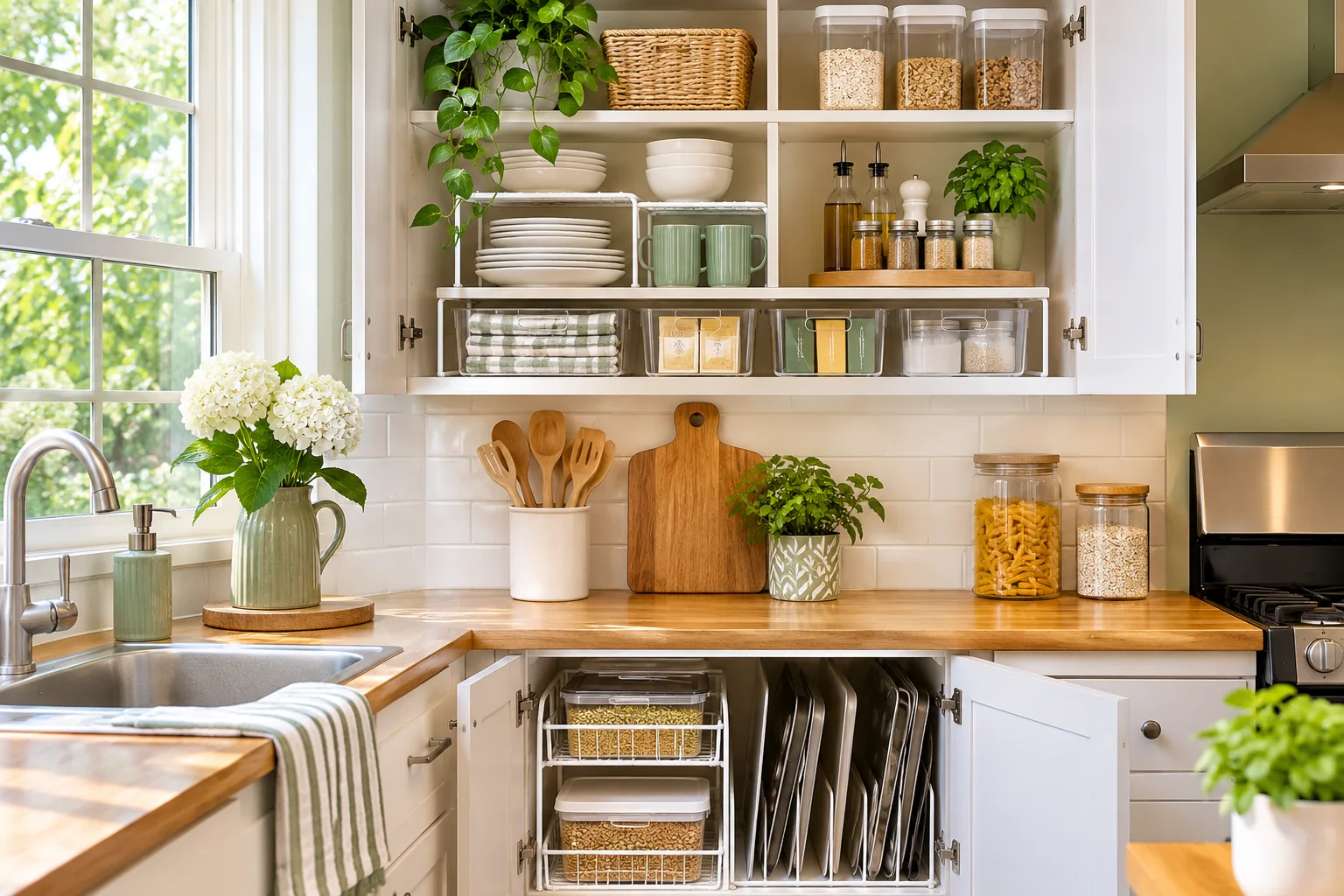
| Stackable shelf risers | Best for short stacks of plates, bowls and mugs | Measure the height between shelves and the footprint of your dishes. Leave room to lift plates off the riser. |
| Pull-out cabinet baskets | Best for deep lower cabinets | Measure interior width, depth and the clearance around hinges and plumbing. Check whether the basket needs screws or mounting rails. |
| Under-shelf hanging baskets | Best for lightweight packets, cloths and wraps | Check shelf thickness, basket depth and whether the cabinet door will still close. |
| Lazy Susan turntables | Best for oils, sauces and small jars | Measure the turntable diameter and ensure there is space to rotate without hitting hinges or taller containers. |
| Vertical pan and lid racks | Best for baking sheets, cutting boards and pot lids | Check the height of the tallest item and whether rack slots fit thicker boards or pans. |
| Cabinet-door organizers | Best for foil boxes, small wraps and lightweight supplies | Measure door clearance, hinge position and how far shelves protrude. Choose removable or screw-mounted hardware to suit your rental or home. |
| Clear handled storage bins | Best for grouped snacks, baking supplies and small packets | Measure shelf depth and height, including the space needed to pull the bin out by its handle. |
Measure first, buy once
Use a tape measure to record the inside width, usable depth and clear height of each cabinet. Measure again at the narrowest point if door hinges, pipes or shelf supports intrude. Check whether the door can close after the organizer is installed, and confirm the manufacturer's weight limit before loading heavy dishes or cookware.
1. Stackable shelf risers
Best for: Best for short stacks of plates, bowls and mugs.
Before buying: Measure the height between shelves and the footprint of your dishes. Leave room to lift plates off the riser.
Why it helps: A quick way to use empty vertical space without drilling.
Watch out for: Thin or unstable risers may wobble under heavy dinnerware.
2. Pull-out cabinet baskets
Best for: Best for deep lower cabinets.
Before buying: Measure interior width, depth and the clearance around hinges and plumbing. Check whether the basket needs screws or mounting rails.
Why it helps: Bring items at the back forward without kneeling and rummaging.
Watch out for: A slide mechanism consumes some usable width and may require installation.
3. Under-shelf hanging baskets
Best for: Best for lightweight packets, cloths and wraps.
Before buying: Check shelf thickness, basket depth and whether the cabinet door will still close.
Why it helps: Make use of space below an existing shelf.
Watch out for: Avoid overloading clip-on baskets; they are not ideal for heavy jars.
4. Lazy Susan turntables
Best for: Best for oils, sauces and small jars.
Before buying: Measure the turntable diameter and ensure there is space to rotate without hitting hinges or taller containers.
Why it helps: Reach items at the back with a quick spin.
Watch out for: Round trays waste some space in square corners and can tip tall bottles if overcrowded.
5. Vertical pan and lid racks
Best for: Best for baking sheets, cutting boards and pot lids.
Before buying: Check the height of the tallest item and whether rack slots fit thicker boards or pans.
Why it helps: Keeps flat items upright so you can remove one without moving a stack.
Watch out for: Fixed slots can be too narrow for bulky cookware.
6. Cabinet-door organizers
Best for: Best for foil boxes, small wraps and lightweight supplies.
Before buying: Measure door clearance, hinge position and how far shelves protrude. Choose removable or screw-mounted hardware to suit your rental or home.
Why it helps: Uses a surface that often goes unused.
Watch out for: Poorly placed racks can prevent doors closing or knock against shelf contents.
7. Clear handled storage bins
Best for: Best for grouped snacks, baking supplies and small packets.
Before buying: Measure shelf depth and height, including the space needed to pull the bin out by its handle.
Why it helps: Lift out an entire category at once and see what is running low.
Watch out for: Bins add an extra layer of plastic and may waste space if oversized.
A practical setup for a small kitchen
Start with the cabinet that frustrates you most. For an upper cabinet, a single shelf riser or turntable may be enough. For a deep lower cabinet, a pull-out basket or handled bins can improve access. Use a vertical rack for trays and lids, then reassess before buying more.
Five-minute cabinet measuring checklist
- Measure inside width, depth and height.
- Check hinges, pipes, shelf brackets and door swing.
- Group the items you actually want to store.
- Confirm product dimensions, mounting method and weight capacity.
- Choose one organizer to solve the biggest problem first.
More small-kitchen organization ideas
For related solutions, explore our pantry storage guide, kitchen drawer organization guide and under-sink storage ideas.