5 Smart Pantry Storage Ideas for Small Kitchens
A small pantry can work surprisingly well when every shelf has a purpose. Before buying storage containers, take stock of what you own, measure the available space and choose organisers that make everyday items easier to reach.
About this guide: These are practical storage ideas, not hands-on product reviews. We have not personally tested or independently ranked specific products. Check dimensions, materials and current customer feedback before buying.
1. Use shelf risers to double up vertical space
Stackable shelf risers create a second level for cans, mugs or short jars. They are useful when shelves are tall but the items stored on them are small.
Best for: Tall shelves with unused space above items. Consider: Choose sturdy, non-slip risers and measure both the width and the clearance above and below.
2. Group similar items in pull-out bins
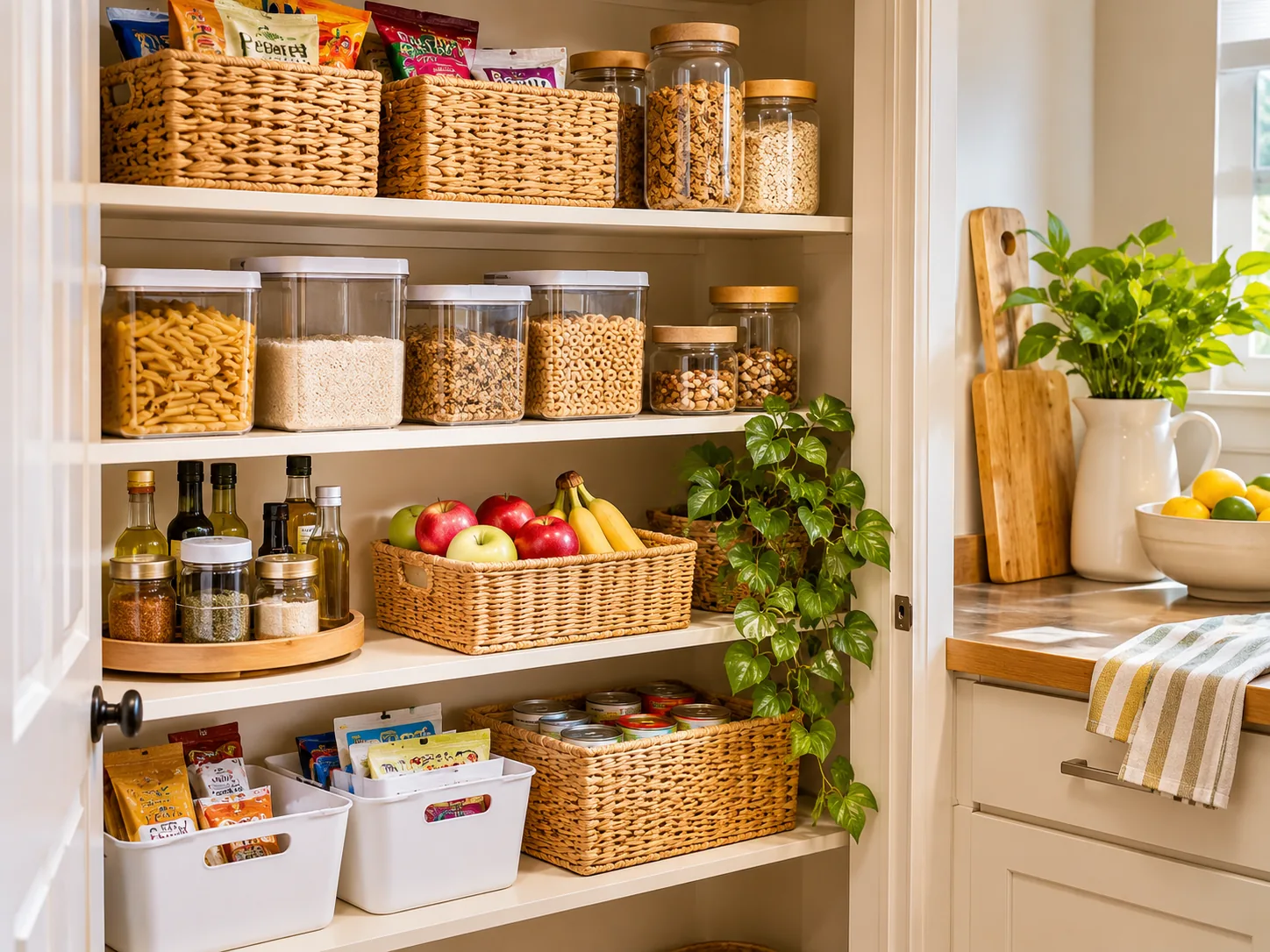
Open-top bins can turn deep shelves into easy-to-access zones for snacks, baking supplies or breakfast items. A handle makes it easier to pull a bin forward instead of reaching behind other products.
Best for: Deep cabinets and loose packets. Consider: Clear bins show contents at a glance, but opaque bins can hide visual clutter. Check that the bin fits through the cabinet opening.
3. Add a turntable for bottles and condiments
A rotating tray, often called a lazy Susan, brings items at the back of a shelf within reach. It works especially well for oils, sauces and small jars.
Best for: Corners and shelves holding many small bottles. Consider: Raised edges can help prevent tipping. Allow enough clearance for the tray to spin without hitting cabinet walls.
4. Make use of the back of a pantry door
Over-the-door racks or slim mounted organisers can hold wraps, spice packets or lightweight snacks without using shelf space.
Best for: Pantries with a suitable hinged door. Consider: Check door thickness, hinge clearance and weight limits. Make sure the rack won't collide with shelves when the door closes.
5. Choose airtight containers selectively
Matching containers can make dry goods easier to stack, but transferring every packet is not always worth the cost or effort. Start with staples you use often, such as rice, flour or cereal.
Best for: Frequently used dry goods and awkward packaging. Consider: Look for food-safe materials, reliable seals and wide openings for cleaning. Keep expiration dates and cooking instructions with the food.
Before you buy: a five-minute pantry check
- Measure shelf width, depth and height, including door clearance.
- Sort items by how often you use them.
- Use existing baskets or containers first to test your layout.
- Choose one organiser type to solve your biggest problem.
- Leave room for groceries rather than filling every inch with storage products.
Quick comparison: what fits your space?
Use this overview to narrow your options. Measure your space and check individual product specifications before buying.
| Storage approach | Best for | Check before buying |
|---|---|---|
| Clear containers | Frequently used dry goods | Keep dates and labels |
| Turntables | Condiments and oils | Measure turning clearance |
| Stackable bins | Snack packets and sachets | Avoid blocking lower bins |
| Shelf risers | Short jars and tins | Check shelf stability |
| Door storage | Lightweight packets | Check hinges and door clearance |
What should you try first?
If your pantry has deep shelves, start with pull-out bins. If it has tall shelves, try a riser. If you keep losing small jars at the back, a turntable may be the simplest fix. The best organiser is the one that solves a specific problem in your kitchen.
Read our related guide: 7 Clever Kitchen Organisers That Save Space