7 Smart Spice Storage Ideas for Small Kitchens
A cluttered spice collection can make cooking slower than it needs to be. These seven ideas help you find the right jar quickly, use awkward spaces and keep spices away from unnecessary heat and moisture.
How this guide was prepared: We compare common storage formats and fit considerations, not specific tested products. We have not hands-on tested these organizers, and there are no paid rankings or affiliate links in this guide.
Quick comparison: which spice organizer fits your kitchen?
| Storage idea | Best for | Measure before buying |
|---|
7 ways to organize spices without wasting space
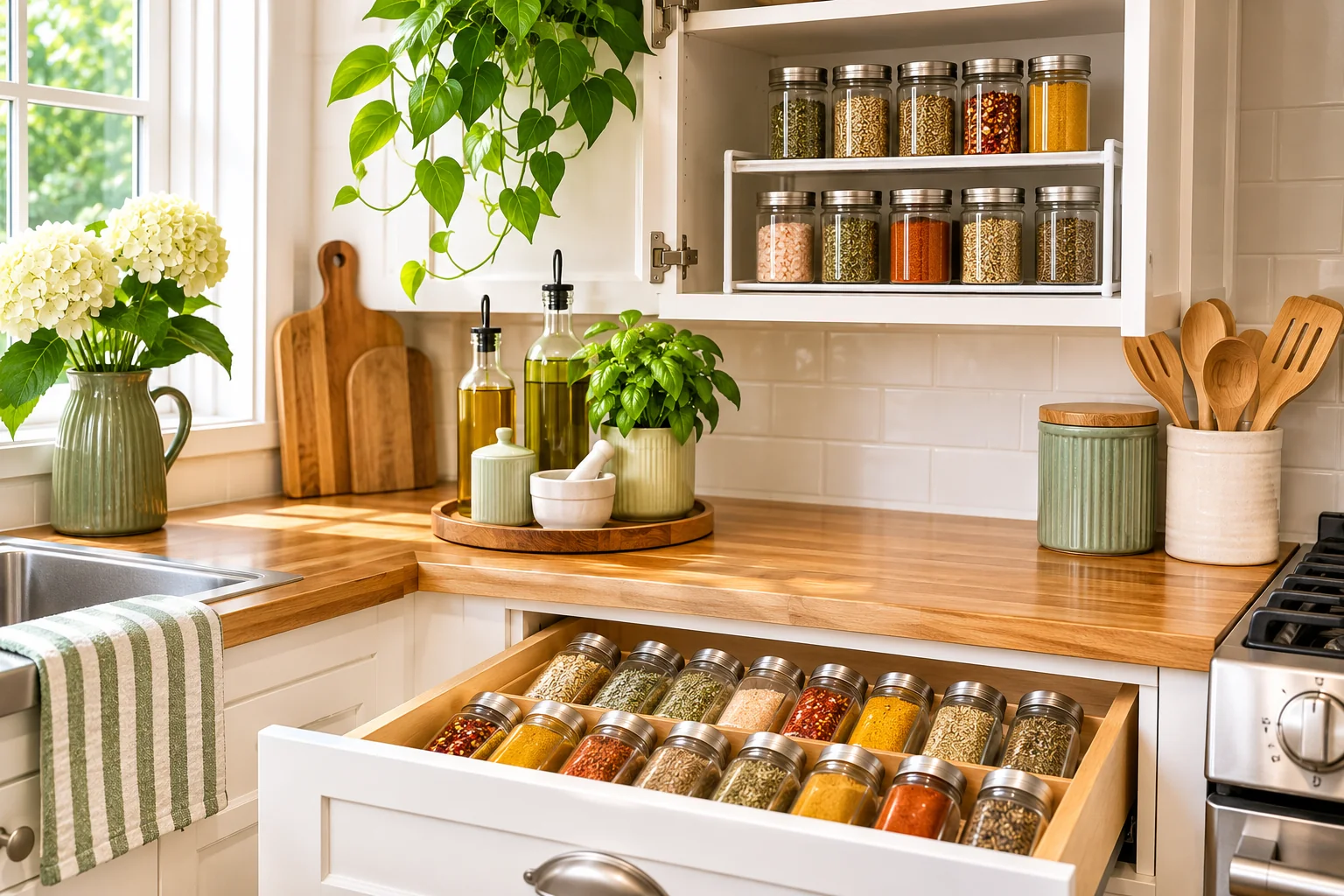
1. Spice drawer inserts
Best for: Shallow drawers near your prep area. Easy to scan labels from above; frees cabinet space.
Before you buy: Measure usable drawer width, depth and height with jars in place.
Trade-off: Needs a sufficiently deep drawer and jars of compatible size.
2. Tiered cabinet shelves
Best for: Upper cabinets with a mix of spice jars. Back-row jars become easier to see.
Before you buy: Measure shelf width, depth, and clearance to the shelf above.
Trade-off: Tall jars may block shelves or tip if the tiers are narrow.
3. Pull-out spice racks
Best for: Narrow lower cabinets or deep shelves. Makes hard-to-reach jars accessible.
Before you buy: Measure the opening, hinge clearance and the rack’s full extension.
Trade-off: Costs more and may need drilling or assembly.
4. Magnetic spice containers
Best for: Metal surfaces away from stove heat. Can free shelf and drawer space.
Before you buy: Confirm the surface is magnetic and jars will not slip when full.
Trade-off: Not suitable for every refrigerator or wall; check lid seals.
5. Cabinet-door spice racks
Best for: Unused inside cabinet doors. Uses space that is often wasted.
Before you buy: Measure door thickness, interior clearance and shelf contents.
Trade-off: Door may not close if the rack hits shelves or hinges.
6. Wall-mounted spice shelves
Best for: Small kitchens with spare wall space. Keeps frequently used spices in view.
Before you buy: Check wall width, jar depth and mounting requirements.
Trade-off: Avoid direct sun, steam and heat near the cooktop.
7. Compact countertop turntables
Best for: Frequently used seasonings. Quick access without rummaging.
Before you buy: Measure counter footprint and clearance under upper cabinets.
Trade-off: Takes up worktop space and needs regular cleaning.
Measure first: a five-minute checklist
Which option should you choose?
Buying matching jars can look attractive, but it adds cost and requires careful labeling. Use your existing jars first and choose an organizer that fits them.